
THE PRACTICAL GUIDE
Focus: how to set up a crate for IVDD recovery, IVDD crate rest setup, crate rest bedding for dogs
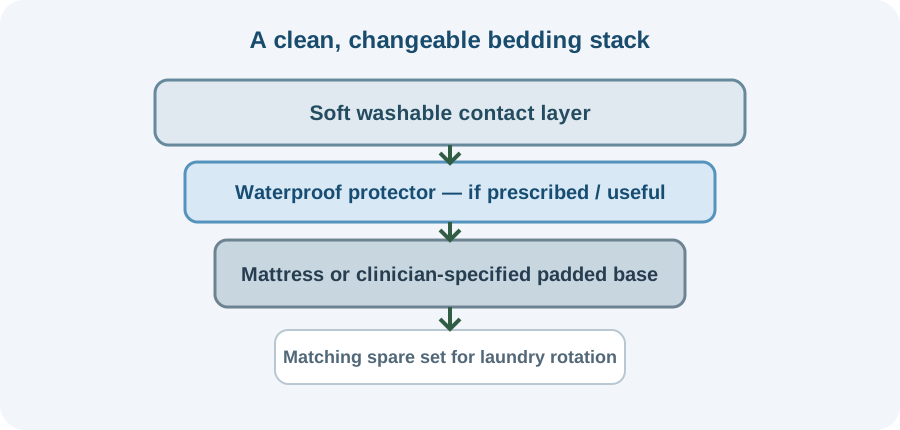
What should the crate bedding system include?
- Approved enclosure: use the size and type specified by the neurologist or veterinarian.
- Resting pad: choose a surface and cushioning level matched to the dog’s ability to reposition and the clinician’s advice.
- Moisture protection: add a waterproof protector if the dog has accidents, bladder-expression needs or other moisture risks.
- Washable top layer: keep the contact surface clean, dry and free from wrinkles or bunching.
- Spare set: have replacement covers and pads ready so a soiled layer can be changed promptly.
How do you size the pad?
Measure the inside floor of the crate and the dog’s natural resting footprint. For a Dachshund, do not rely only on weight-based crate charts. The pad should fit flat with no folded corners, raised ridges or blocked doorway. Confirm the enclosure dimensions with the care team rather than choosing a crate based on the bed listing.
Where should the crate be placed?
Ask the veterinary team where the recovery area should be located and how access to water, toileting and care should work. A quiet, temperature-appropriate area may be practical, but do not place the crate where stairs, other pets or household traffic make safe handling difficult. The dog’s individual needs determine whether water stays inside the enclosure or is offered another way.
How do you handle wet or soiled bedding?
Change damp top layers promptly and keep the dog’s skin clean and dry. If the dog cannot stand or turn independently, ask for a demonstrated method to change bedding without twisting or dragging the dog. Ask how often the dog should be checked and repositioned, if needed.
What about bladder care?
Some IVDD patients need help emptying their bladder. ACVS notes that bladder expression may be required for some dogs. A veterinarian or trained team member must demonstrate the technique and provide an individual schedule. Do not attempt to learn it from a written bed guide or video alone.
What are the crate-rest rules?
Confinement duration, toileting, handling and allowed activity must come from the treating team. The ACVIM consensus statement recommends at least four weeks of restricted activity for acute thoracolumbar disc extrusion, but that is not a complete individual discharge plan. Never enlarge the space or introduce more activity based only on the calendar.
See the IVDD bed buying guide for product specifications and the Dachshund essentials checklist for supplies.
Suggested buying options
The same set of publisher-supplied buying links is included throughout this guide. Use the links as a starting point, then verify the exact item, size, usable dimensions, entry height, materials, liner construction, cover care, seller, price and return terms on the destination page. They are comparison options, not a clinical ranking or a claim that a product treats or improves a medical condition.
Affiliate disclosure: IVDD Recovery Bed may earn a commission from a qualifying purchase through these links, at no additional cost to the reader. Commission availability does not determine editorial selection.
- Bedsure Orthopedic Dog Crate Bed Mat with Removable Machine Washable Cover — Black
- Frisco Orthopedic Pillow Cat & Dog Bed with Removable Cover — Navy Herringbone
- View IVDD bedding option 03
- View IVDD bedding option 04
- View IVDD bedding option 05
- View IVDD bedding option 06
Before buying, confirm that the listing is the intended product and that the dimensions and setup match your dog’s actual measurements and veterinary instructions.
Veterinary and reference sources
- American College of Veterinary Surgeons: Intervertebral Disc Disease
- ACVIM Consensus Statement: Diagnosis and Management of Acute Canine Thoracolumbar Intervertebral Disc Extrusion
- Cornell University College of Veterinary Medicine: Intervertebral Disc Disease
- Dachshund Club of America: Intervertebral Disc Disease
Sources provide clinical context. This site does not provide individualized medical advice or replace discharge instructions.